


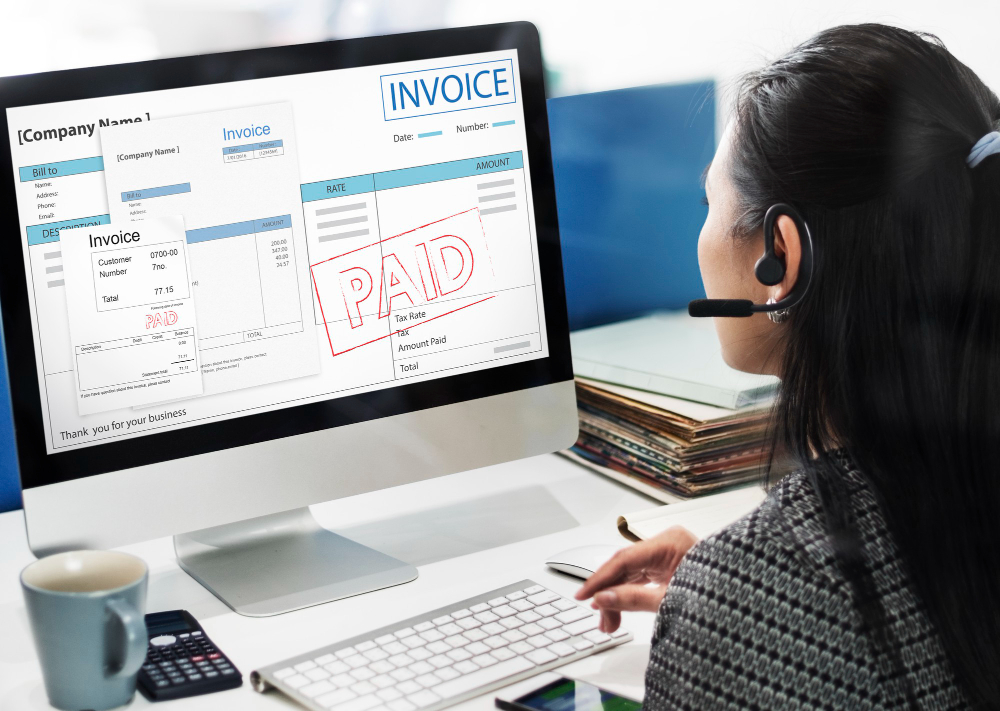
E-Invoicing in the UAE: What Every Business Must Implement by 2026 to Avoid Penalties
The UAE is advancing digital tax administration, which is why e-invoicing has become the focal point of the national initiative. E-invoicing will become a compulsory requirement for VAT-registered companies by July 2026. This will reshape how invoices are reported, validated, and issued.
This change is introduced by the FTA (Federal Tax Authority) as part of the digital tax compliance system. Understanding operational, regulatory, and technical requirements is now essential to protect revenue and maintain compliance for companies operating in the UAE.
What is E-Invoicing in the UAE?
E-invoicing refers to the creation, exchange, validation/verification, and storage of invoices in electronic formats, such as JSON or XML. Such invoices will be validated in near real time and shared electronically via approved channels by the tax authority.
Traditional PDF files and paper invoices are not considered valid for VAT under the UAE's e-invoicing framework. Each tax invoice should meet documentation and strict technical standards that comply with international and national data protocols set by the FTA. This system enables integration between the government's tax infrastructure and companies to strengthen VAT enforcement and improve data accuracy across all sectors.
Why is the UAE Making E-Invoicing Mandatory?
The government of the UAE is making e-invoicing necessary to strengthen audit controls, reduce VAT reporting errors, and promote transparency. This is because manual invoicing often results in incomplete records, delayed reporting, and inconsistent data, which complicates tax oversight. The government will get instant access to transaction-level data by enforcing structured electronic invoicing. This enables stronger detection of fraud or underreporting.
The change is also meant to improve audit readiness for companies, as well as to accelerate invoice processing cycles to reduce reliance on manual entry. The e-invoicing system also supports the UAE's objective of creating a digital economy supported by automated compliance systems and precise financial data.
Obligatory Compliance Deadlines & Rollout Timeline
E-invoicing implementation follows a phased rollout based on annual turnover and company size. The FTA has appointed approved service providers and defined strict deadlines to allow companies to upgrade their systems accordingly.
Key Compliance Dates
Pilot testing phases are expected before full enforcement, allowing businesses to validate frameworks before live reporting.
• July 2026: Obligatory e-invoicing starts for VAT-registered companies.
• July 31, 2026: Companies with an annual turnover of more than AED 50 million must appoint an ASP (Accredited Service Provider).
• January 1, 2027: Large companies must go live with the national e-invoicing system.
• March 31, 2027: Smaller companies must appoint an ASP.
• July 1, 2027: Mandatory implementation starts for small companies.
Who Must Comply with the UAE's E-Invoicing Regulations?
All VAT-registered companies that conduct taxable activities in the UAE have to comply with the national e-invoicing system. This includes B2G (business-to-government) and B2B (business-to-business) transactions.
Suppliers are also required to provide electronic invoices via approved platforms that use structured data formats.
Required System Upgrades & Integrations
E-invoicing compliance requires upgrades across ERP, accounting, and finance systems. Companies must ensure that their internal systems can generate structured invoice data and transfer it via accredited channels.
Integration Options
The chosen integration model affects compliance reliability, error rates, and processing speed.
• Complete ERP-to-ASP Integration: Provides consistent reporting, higher accuracy, and end-to-end automation.
• Partial API Integration: Enables automated submission and validation for selected invoice types.
• Manual Data Entry: Best suited for low invoice volumes, but can result in compliance risks and higher labor costs.
Finance System Upgrades
Legacy accounting systems often lack the functionality to generate compliant JSON or XML invoices. Companies will have to update finance platforms to support secure storage, validation, and data creation. Internal workflow and staff training adjustments are required to support the latest invoice processing.
Technical Standards & API Specifications
Invoices must follow specific, structured formats aligned with global standards like Peppol. Such standards ensure compatibility with global e-invoicing networks and a uniform invoice content across industries. APIs handle invoice acknowledgement, transmission, and validation, allowing tax authorities to review them instantly after issuance.
Record-Keeping & Documentation Standards
E-invoicing underscores the importance of accurate digital records, and companies must maintain secure electronic invoice storage with access controls, validation logs, and timestamps. The accessibility of invoices is vital for regulatory reviews and audits, with retention durations aligned with the UAE VAT laws. Cloud-based storage can be used to meet security and scalability requirements.
Penalties for Non-Compliance
The FTA has defined penalties for companies that do not meet e-invoicing requirements. Such penalties may accumulate over time and are applied per incident.
Penalty Overview
Non-compliance might result in reputational damage, loss of customers, and payment delays.
• AED 5000 monthly fine for delayed ASP appointment.
• AED 100 per invoice for not transmitting electronically.
• Denial of VAT input recovery for non-compliant invoices.
• Audit complication results from incomplete digital records.
Common Challenges Companies Face
Adapting to e-invoicing comes with various challenges. Early preparation allows companies to close technical gaps and reduce disruption.
• System Integration: Connecting existing ERPs to new reporting platforms takes time and careful configuration.
• Data Accuracy: Validation leaves a low margin for invoice errors.
• Operational Readiness: Internal procedures must adapt to digital workflows.
• Regulatory Alignment: Ongoing analysis and monitoring are essential, as technical standards are constantly evolving.
E-invoicing in the UAE will become a notable shift in tax compliance requirements. All VAT-registered companies must meet strict reporting standards, integrate approved systems, and provide structured electronic invoices by July 2026. Companies that align documentation practices, appoint ASPs, and upgrade systems ahead of deadlines will be considered operational, stable, and compliant.
Contact Us for Assistance With Corporate Tax in UAE
At Consult Kumar®, we offer specialized UAE tax expertise with a thorough understanding of local tax laws and regulations. Our tailored solutions address your specific business requirements, ensuring compliance.
With dependable and timely service, we help you meet deadlines and provide efficient tax management through a client-focused approach and dedicated support. Contact us at +971 52 2500540 for further details.
Frequently Asked Questions
1. When does e-invoicing become mandatory in the UAE?
Mandatory e-invoicing begins in July 2026 for VAT-registered companies. Companies with annual turnover above AED 50 million must appoint an Accredited Service Provider by 31 July 2026 and go live by 1 January 2027, while smaller companies follow by 1 July 2027.
2. Who must comply with the UAE's e-invoicing regulations?
All VAT-registered companies conducting taxable activities in the UAE, covering both business-to-business (B2B) and business-to-government (B2G) transactions.
3. Are PDF and paper invoices still valid for VAT?
No. Under the UAE's e-invoicing framework, traditional PDF and paper invoices are not considered valid for VAT. Invoices must be issued in structured formats such as XML or JSON and transmitted through approved channels.
4. What are the penalties for e-invoicing non-compliance?
Penalties include an AED 5,000 monthly fine for delayed ASP appointment, AED 100 per invoice not transmitted electronically, denial of VAT input recovery for non-compliant invoices, and audit complications from incomplete digital records.
5. What system changes do businesses need to make?
Upgrades across ERP, accounting, and finance systems so they can generate compliant structured invoice data and transmit it via accredited channels. Options range from full ERP-to-ASP integration to partial API integration, alongside staff training on new workflows.
6. How long must e-invoices be stored?
Companies must maintain secure electronic invoice storage with access controls, validation logs, and timestamps, with retention durations aligned with UAE VAT laws. Cloud-based storage can meet security and scalability requirements.
